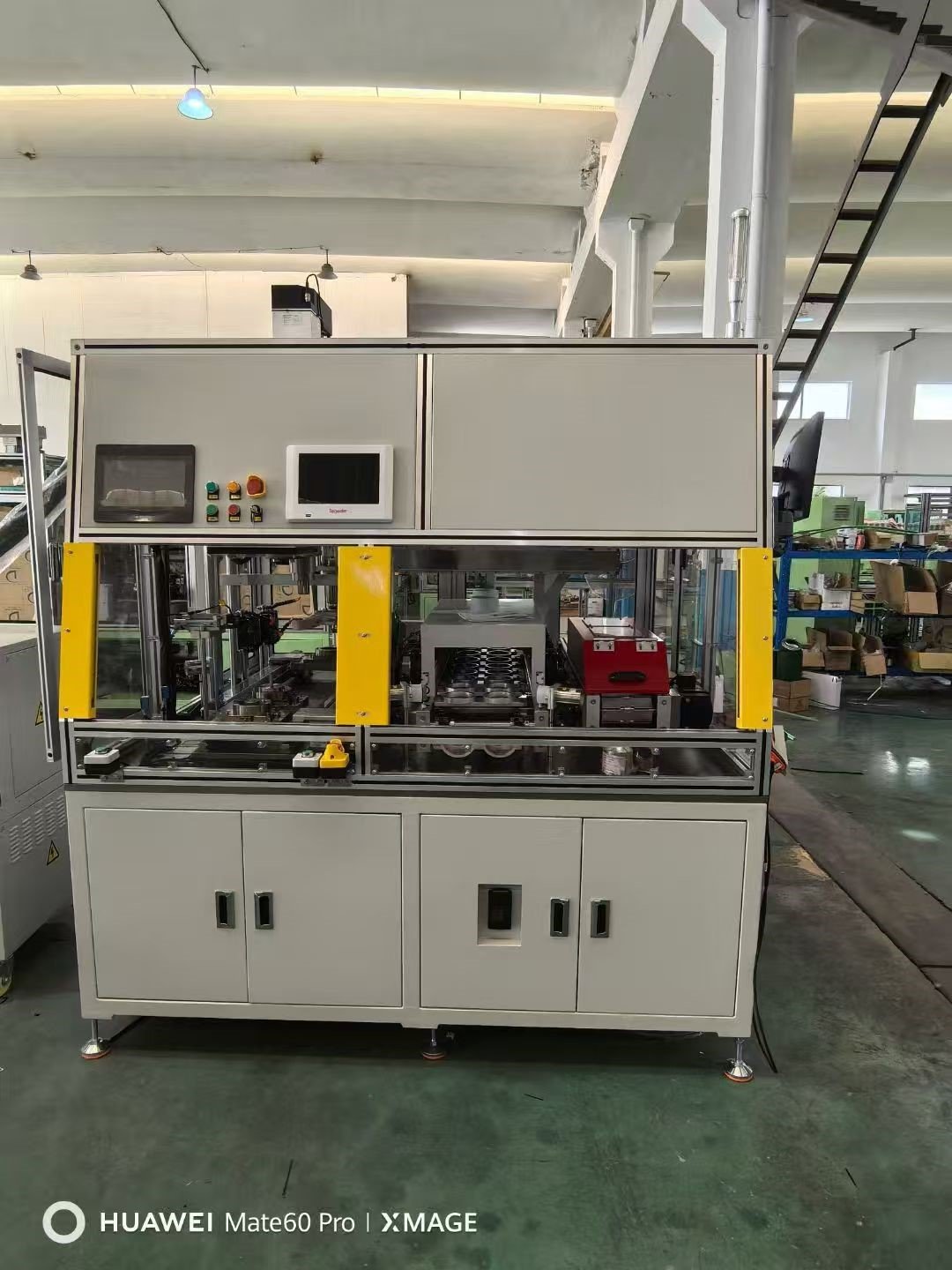
Brushless DC motors are now an important part of modern electrical equipment, automation systems and mobility technologies. Their efficient operation, compact construction and low mechanical wear make them suitable for everything from cooling fans and pumps to robotics, electric vehicles and industrial machinery. However, producing a dependable BLDC motor requires more than high-quality electrical components. Every part must be assembled accurately so the motor can rotate smoothly and deliver the expected performance. A bldc motor assembly machine provides manufacturers with a practical way to improve this precision while increasing production efficiency.
BLDC motor assembly involves several carefully controlled operations. The stator, rotor, shaft, bearings, magnets, housing and other components must be positioned and secured according to the motor’s design. Modern assembly equipment can automate many of these tasks, reducing variation between individual motors and helping manufacturers maintain consistent production standards.
What Is Involved in BLDC Motor Assembly?
A typical BLDC motor contains a stationary stator and a rotating rotor. The stator carries the copper windings, while the rotor contains permanent magnets. Electronic control circuitry energises the stator phases in a sequence that causes the magnetic rotor to rotate.
Before assembly, each component needs to be manufactured or prepared according to the required specifications. The stator windings must have the correct configuration, the rotor magnets must be correctly positioned, and mechanical components such as shafts and bearings must meet their dimensional requirements.
The assembly process brings these parts together while maintaining precise alignment. The rotor must sit correctly within the stator, the shaft must align with the bearings, and the housing must securely support the complete assembly.
Depending on the motor design, an assembly line may include several separate stations. These can cover bearing fitting, rotor assembly, stator positioning, housing installation, fastening and end-of-line testing.
A bldc motor assembly machine can combine some of these operations into an automated or semi-automated system. The objective is to make assembly faster and more repeatable without compromising the mechanical accuracy required by the motor.
Component Positioning and Alignment
Correct positioning is one of the most important aspects of motor assembly. The rotor and stator need to maintain the designed air gap throughout operation. If components are incorrectly aligned, the motor may develop excessive vibration, noise or mechanical resistance.
Precision fixtures help hold components in the correct position during assembly. Automated machines can move parts into these fixtures and perform operations according to programmed coordinates.
Sensors can also be used to confirm that a component is present and correctly positioned. If the system detects an abnormal condition, it can stop the process before the motor moves to the next stage.
This type of process control is particularly useful in high-volume manufacturing, where even a small percentage of defective assemblies can result in substantial material loss.
Bearing Installation Requires Care
Bearings allow the motor shaft to rotate smoothly and support the rotating assembly. Although bearing installation may seem simple, incorrect fitting can cause problems later.
Applying excessive force in the wrong location can damage a bearing or its surrounding components. Insufficient seating can also create alignment problems. For this reason, automated assembly equipment may use controlled pressing systems.
A modern machine can regulate pressing force and movement while monitoring the operation. This allows manufacturers to establish defined parameters for each motor model.
Force monitoring also provides useful production information. If the required force suddenly changes, it may indicate an incorrect component, dimensional issue or another manufacturing problem.
This helps manufacturers identify problems earlier rather than relying entirely on final motor testing.
Rotor and Magnet Assembly
Permanent magnets are central to BLDC motor operation. Their position and orientation influence the magnetic field and therefore the performance of the motor.
During rotor production, magnets must be installed accurately according to the motor’s design. Depending on the construction, they may be inserted into rotor slots or attached to the rotor surface.
Automated fixtures can help maintain consistent magnet positioning. Adhesive application, where required, can also be controlled to improve repeatability.
The rotor then needs to be combined with the shaft and balanced appropriately. Accurate assembly is important because the rotor will operate continuously at speed. Any imbalance can increase vibration and place additional loads on bearings and other components.
Advantages of Automated Assembly
One of the strongest reasons to use a bldc motor assembly machine is repeatability. Human operators can perform assembly accurately, but repetitive work can naturally introduce small differences. Automated equipment can repeat the same movements and process parameters with greater consistency.
Production speed is another benefit. Machines can carry out repetitive operations quickly, making them suitable for high-volume manufacturing environments.
Automation can also improve workplace safety. Motor components may be heavy, small or awkward to handle. Mechanical handling systems can reduce the amount of repetitive lifting and positioning required from workers.
Another advantage is data collection. Modern equipment can monitor assembly force, torque, position and other parameters. This information can be stored and analysed to support quality improvement.
When assembly and testing systems are connected, manufacturers can also create detailed production records. This can improve traceability and make it easier to investigate problems.
Quality Control Throughout Assembly
Quality should be monitored throughout the assembly process rather than only after the finished motor has been built. Incoming components should first be checked for dimensional and material conformity.
During assembly, machines can monitor important parameters. Position sensors can verify component placement, while force sensors can monitor pressing operations. Controlled fastening tools can check whether screws or other fasteners have been tightened to the required torque.
After assembly, the motor can undergo electrical and mechanical tests. Electrical testing may include winding resistance and continuity checks. Mechanical testing can involve shaft rotation, vibration and noise measurements.
Some manufacturers also conduct no-load running tests. The motor is operated under controlled conditions so technicians can identify unusual behaviour before the product is shipped.
Automated end-of-line testing is particularly useful in large production facilities because it can evaluate motors quickly and consistently according to predefined limits.
Choosing a Suitable BLDC Assembly Machine
There is no single assembly machine that is ideal for every BLDC motor manufacturer. Equipment selection should begin with the motor’s physical and electrical design.
Stator and rotor dimensions are important because the machine must accommodate the components safely. Production volume should also be considered. A factory producing a single motor model in large quantities may benefit from a highly automated line, while a manufacturer producing several designs may need more flexible equipment.
The number of assembly operations that need automation is another consideration. Some companies may only need automated bearing and rotor installation, while others may want a complete production line with component loading, assembly and testing.
Programming capability is also useful. If different motor models are produced, operators can use stored recipes to change assembly parameters without rebuilding the entire process.
Maintenance and technical support should be evaluated before purchasing equipment. Reliable spare parts, operator training and service availability can have a major effect on long-term productivity.
Industries Using BLDC Motor Technology
BLDC motors are used across a broad range of industries. Electric mobility is one of the most visible areas, with brushless motors appearing in different types of electric transport and auxiliary systems.
Industrial automation uses BLDC motors for controlled movement in machines, actuators and robotic equipment. Their compact construction can also make them useful where installation space is limited.
Cooling fans and pumps are additional applications. Efficient motor operation can be particularly valuable when these devices operate for long periods.
BLDC motors are also found in appliances, electronic equipment and specialised machinery. Each application can have different requirements for speed, torque, efficiency and operating life, which means manufacturers need assembly equipment capable of supporting different motor designs.
The Move Towards Smart Assembly
Digital manufacturing is changing the way electric motors are produced. Sensors and software can now monitor assembly processes and provide detailed information about machine performance.
A connected bldc motor assembly machine can track parameters such as assembly force, component position, fastening torque and cycle time. If a value moves outside its expected range, the system can alert the operator or stop production.
This data can support continuous improvement. Engineers can compare results between production batches and identify recurring issues.
Predictive maintenance is another potential benefit. Monitoring machine condition can help identify wear in tooling, bearings and other components before they fail unexpectedly. Planned maintenance can then reduce production interruptions.
Robotic material handling may also become more common. Robots can move components between stations, load fixtures and perform repetitive assembly tasks. Combined with automated inspection, this can create highly efficient production environments.
Looking Ahead
The future of BLDC motor manufacturing will depend increasingly on precision, flexibility and digital control. Customers expect motors that deliver reliable performance, while manufacturers need to produce them efficiently and economically.
A bldc motor assembly machine can support these objectives by improving component positioning, controlling repetitive operations and collecting useful production data. When integrated with suitable inspection and testing systems, automated assembly can provide manufacturers with greater confidence in the consistency of their products.
However, technology is only one part of the equation. Skilled engineers and technicians remain essential for machine setup, maintenance, quality analysis and process improvement.
As BLDC motors continue to expand into electric mobility, robotics, automation, appliances and industrial equipment, precise assembly will remain a fundamental part of their production. Manufacturers that combine advanced assembly machinery with reliable components, skilled personnel and effective quality control will be well placed to meet the growing demand for efficient and dependable brushless motors.