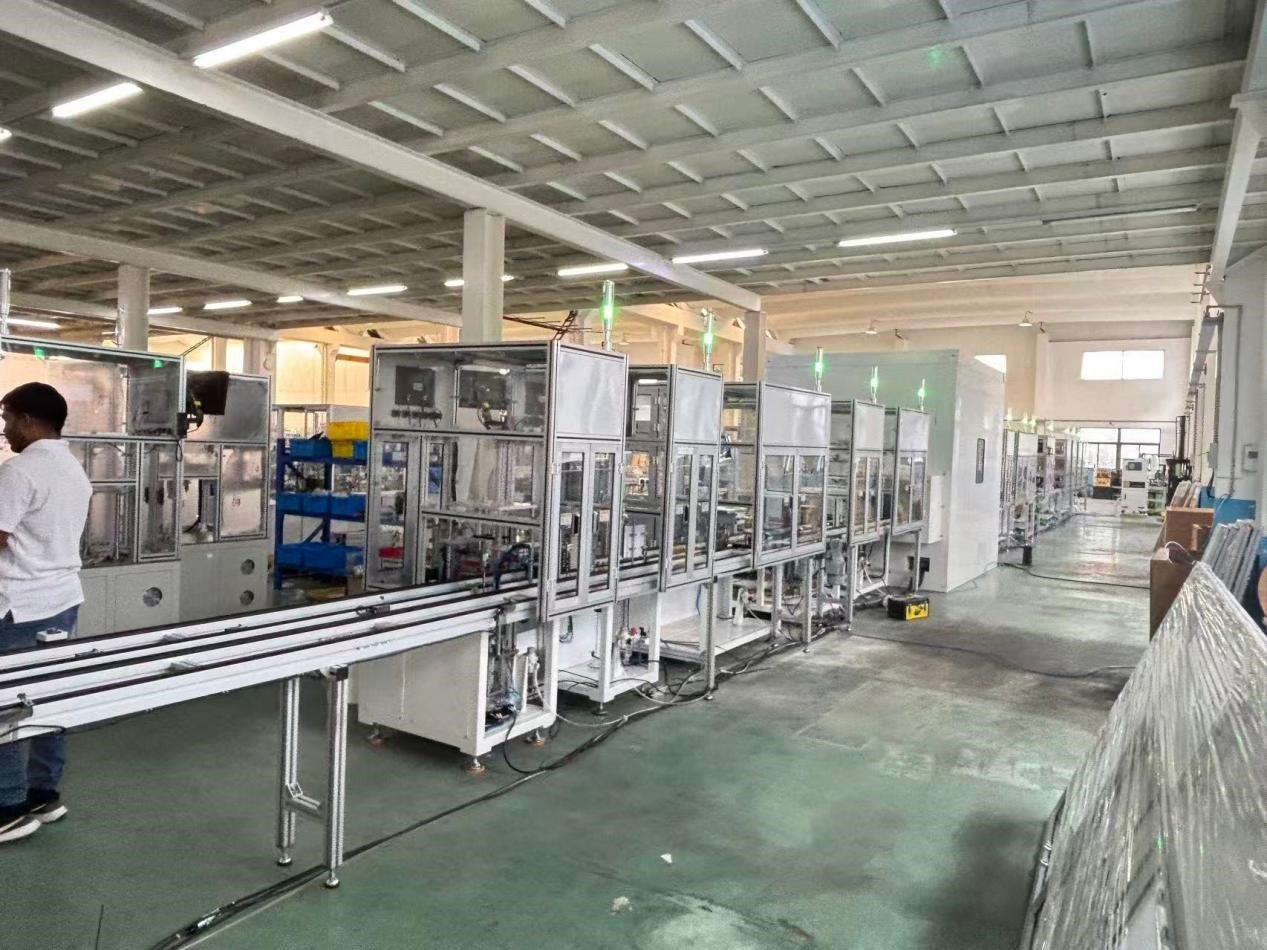
The demand for brushless DC (BLDC) motors has increased across many areas of modern manufacturing. These motors are used in electric vehicles, fans, pumps, industrial automation, power tools, medical equipment, cooling systems, and various consumer products. Their compact construction and ability to provide controlled and efficient operation make them suitable for applications where reliable motor performance is important.
However, producing a dependable BLDC motor involves much more than manufacturing individual components. The components must be assembled correctly, with careful attention to alignment, pressure, positioning, electrical connections, and mechanical tolerances. As manufacturers move towards higher production volumes, relying entirely on manual assembly can make consistency more difficult to maintain. This is where a bldc motor assembly machine can become an important part of a modern production setup.
Assembly Accuracy Has a Direct Impact on Motor Performance
BLDC motors contain several components that need to work together with relatively small margins for error. The stator, rotor, shaft, bearings, magnets, housing, and electrical connections all have specific assembly requirements. If one component is positioned incorrectly, the finished motor may experience unnecessary vibration, noise, friction, or electrical performance issues.
For example, a bearing that is not properly seated can affect shaft rotation and may contribute to uneven mechanical behaviour. Similarly, incorrect positioning during rotor installation can create clearance problems between rotating and stationary components. These issues may not always be immediately obvious during assembly, which is why controlled processes and appropriate testing are important.
Manual assembly remains useful for certain applications, particularly where production volumes are low or products are highly customised. However, repetitive operations performed manually can introduce variation. Operators may apply slightly different pressure, position components differently, or complete an operation at different speeds.
Automated assembly equipment can reduce some of these differences by using controlled movements and predefined process parameters. Instead of depending entirely on individual judgement, important operations can be performed according to established settings.
Where Automation Can Make a Difference
A modern assembly system can support several stages of BLDC motor production. The exact configuration depends on the motor design and the manufacturer’s requirements, but common operations can include component loading, bearing pressing, shaft installation, rotor insertion, housing assembly, fastening, and inspection.
One of the main benefits is controlled force. Some components need to be pressed into position without excessive force. Too little force may result in an incomplete fit, while too much force could damage a component. Automated pressing equipment can be configured to apply a defined force and monitor the operation.
Positioning accuracy is another important consideration. Components need to be placed in the correct location before the next assembly step begins. Fixtures and guided mechanisms can help hold parts in a repeatable position, reducing the possibility of movement during assembly.
Fastening can also be standardised. Where a BLDC motor uses screws or similar fasteners, controlled tools can apply specified torque rather than relying on an operator to judge tightness manually. This can help reduce variation across a production batch.
These functions do not necessarily require a completely automated factory. Many manufacturers use semi-automatic equipment in which an operator loads components while the machine performs the critical assembly operation. This approach can provide a practical balance between automation and flexibility.
Choosing Equipment Around the Motor Design
There is no universal assembly machine that is automatically suitable for every BLDC motor. Different motors can have different dimensions, component materials, shaft designs, winding arrangements, and assembly sequences. Equipment should therefore be selected according to the actual production process.
The first step is to identify which operations are repetitive and which require the greatest degree of consistency. A manufacturer may discover that bearing installation is the main source of variation, while another production line may need greater control over rotor insertion or housing assembly.
Production quantity should also influence the decision. A high-volume manufacturer may benefit from integrated automation that connects multiple assembly operations. A smaller manufacturer may find a modular or semi-automatic system more practical because it can be adapted to different motor models.
Tooling is another important factor. Fixtures should hold components securely without damaging surfaces or interfering with the assembly process. If several motor models are produced, interchangeable tooling can make equipment more flexible.
Manufacturers should also consider how easily machine settings can be adjusted. Production requirements can change when a new motor model is introduced or when component specifications are modified. Equipment that allows controlled adjustments can be easier to integrate into an evolving production environment.
Process Monitoring Helps Identify Problems Earlier
Automation becomes more useful when assembly operations can be monitored rather than simply repeated. Sensors and control systems can record information such as force, position, torque, cycle time, and component presence, depending on the machine configuration.
This information can help manufacturers identify unusual results during production. If a pressing operation suddenly requires significantly more force than usual, for example, the process may need to be checked for a component or tooling issue. Detecting such deviations early can prevent a larger batch of motors from being assembled under unsuitable conditions.
Process monitoring can also support troubleshooting. When a finished motor fails a test, production data may help engineers determine where the problem could have occurred. It does not replace physical inspection, but it can provide useful information about the conditions under which the motor was assembled.
This is particularly valuable for manufacturers that supply motors to other businesses and need consistent production records. Clear process information can make quality investigations more organised and help production teams identify recurring issues.
Human Skills Still Matter
Greater automation does not remove the need for experienced manufacturing personnel. Machines are effective at performing defined and repetitive operations, but people are still required to set up equipment, inspect components, maintain machinery, investigate faults, and improve production processes.
Operators also need to understand the reason behind the machine’s settings. Simply running an automated cycle is not enough if a component is incorrectly loaded or a fixture has become worn. Proper training helps employees recognise unusual conditions and respond appropriately.
Maintenance is equally important. Bearings, tooling surfaces, sensors, pressing mechanisms, and other machine components can experience wear over time. If maintenance is ignored, the accuracy and repeatability of the assembly process may gradually decline.
A planned maintenance programme can include routine cleaning, inspection, calibration, lubrication where appropriate, and replacement of worn components. The exact requirements depend on the equipment and operating environment.
Connecting Assembly With Final Testing
A reliable BLDC manufacturing process should not end when the motor has been physically assembled. Final testing provides an additional opportunity to identify defects before the product is delivered.
Depending on the motor and application, manufacturers may perform electrical, mechanical, and functional tests. These can include resistance checks, insulation testing, rotational testing, vibration measurement, noise assessment, current measurement, and other application-specific tests.
Assembly data and test results can provide a more complete picture of production quality. If a particular type of assembly deviation is repeatedly followed by a certain test failure, engineers may be able to investigate the relationship and make appropriate process changes.
This approach also encourages continuous improvement. Rather than treating every failed motor as an isolated problem, manufacturers can examine production data to determine whether a pattern exists.
Making Automation Practical for Long-Term Production
Investing in a bldc motor assembly machine should be based on actual production requirements rather than automation for its own sake. A machine that is unnecessarily complex can increase training, maintenance, and integration requirements without providing proportional benefits.
Manufacturers should consider factors such as production volume, motor variety, required tolerances, available floor space, operator skills, maintenance support, tooling requirements, and future product changes. It is also important to assess whether the machine can be integrated with existing production and testing equipment.
For some factories, a single automated station may solve the most important consistency problem. For others, a series of connected stations may be justified by production volume and product design. The appropriate approach depends on the individual manufacturing environment.
The wider trend is towards production systems that combine automation with inspection and process data. Rather than focusing only on faster assembly, manufacturers are increasingly interested in repeatability, traceability, manageable maintenance, and predictable quality.
BLDC motors are likely to remain important in many industries as demand grows for efficient and controllable electric drives. As production requirements become more demanding, controlled assembly will play an increasingly important role. With suitable equipment, trained operators, proper component control, and reliable final testing, manufacturers can create a more consistent process without relying on unrealistic levels of automation. The key is to select technology that fits the motor, the production volume, and the quality requirements of the application.